Author Archive
Maker Faire Project
Posted by Craig in Uncategorized on March 10th, 2019
What You See is What You Hear
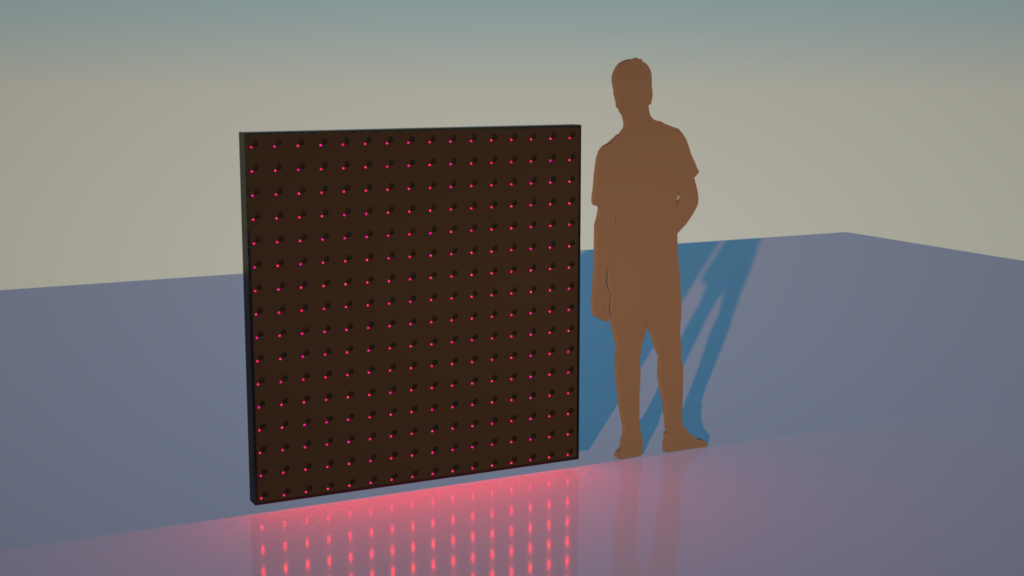
Visualizing Algorithmic Music with Hardware
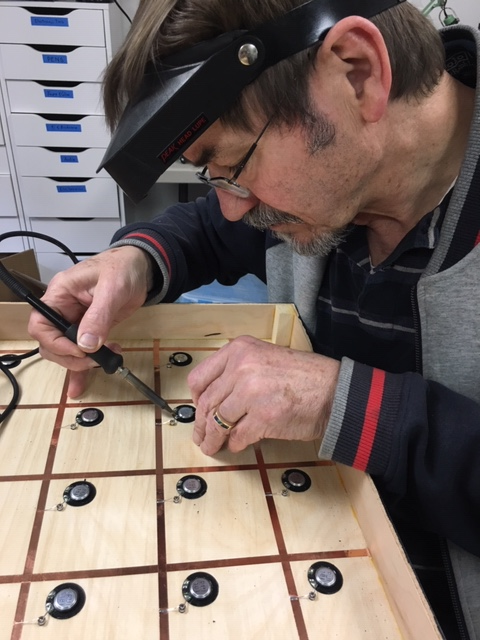
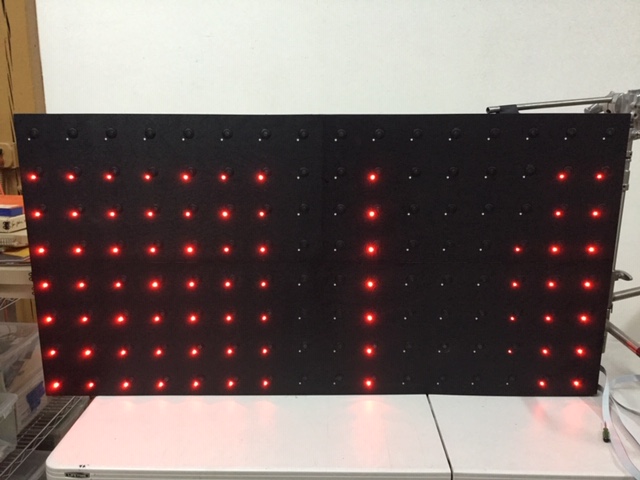
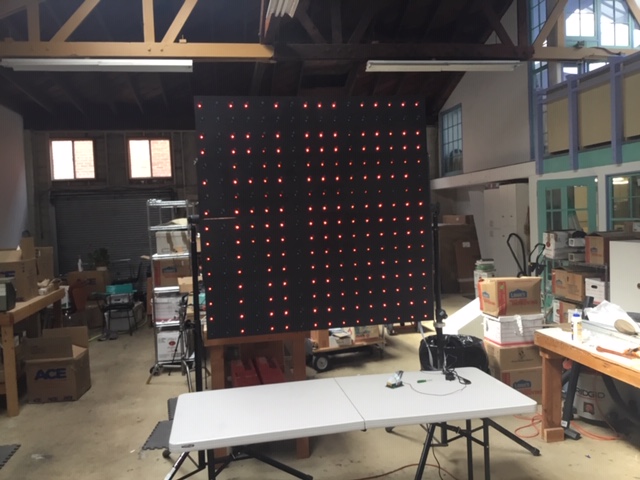
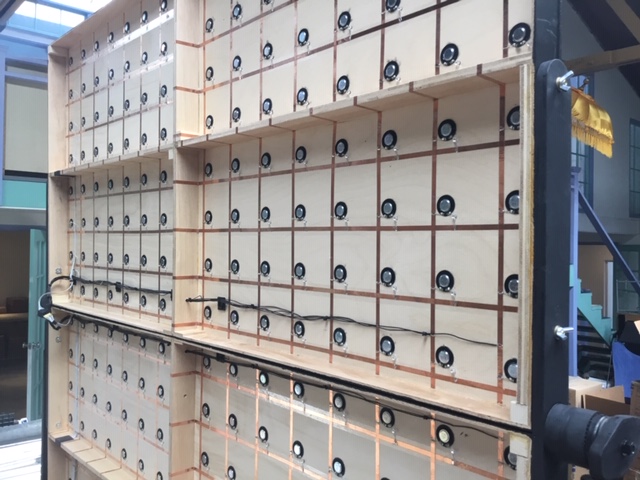
I’m building a project for this year’s Bay Area Maker Faire. I’ve been thinking about this project for a long time. It is composed of a matrix addressed set of 256 LED’s and small speakers. Nothing new about using matrix addressing for LED’s, but speakers?
I’m using a PIC microcontroller to address the array. I will also demonstrate the use of an Arduino Mega to drive this type of display.
I was curious about what would happen and what would be perceived when the sound and light pattern were produced by the same sound and light array.
I’m coding various ways to program the array. The first method I’m using is an idea called one-line algorithmic music. There is a loose group of international enthusiasts who experiment with this method for generating sound.
In a spin on this idea in 2011, a Finish developer, called Viznut, posted videos which caught my interest including this site. http://countercomplex.blogspot.com/2011/10/algorithmic-symphonies-from-one-line-of.html
Visnut and another developer, Bemmu, created a web-based platform to explore these algorithms: http://wurstcaptures.untergrund.net/music/
I’m also coding some other ideas based on iterative functions. These can reveal some interesting complexity in sound and light patterns.
Settling in Oakland CA
Posted by Craig in Uncategorized on March 7th, 2019
Hello,
It has been a long time since posting here. It’s been a busy time for Sally and I.
Sally and I have moved to Oakland Ca.
I moved to the Bay Area in July of 2017 to join Openwater, a start-up in San Francisco, researching medical imaging using ultrasound and holography.
Meanwhile, Sally produced a solo exhibition for the Butler Institute of Art, shown from January through July, 2018, (www.sallyweber.com), and she anticipates completing a public art commission in 2019. From February 2018 on, Sally began the delightful tasks of prepping the house and studio for sale and decommissioning half of our worldly goods to other needy souls by way of a massive moving sale (thank you Carl) – Bless their acquiring hearts.
In late 2017 I landed in a section of Oakland called Jingletown, bordering the estuary between Oakland and Alameda. Sally and Koko, our dog, joined me in July via our car and trailer trek across the country. We knew we had really returned to California when we were surrounded by the rolling hills with scattered live oak trees and a ruby sunset over the Bay.
With most of our stuff in storage, the process began to find studio space in earnest. A harrowing task here. In Jingletown, Sally met the community though its dogs (and their owners). One evening Sally and Koko met a gleeful woman and her dog. The woman had just retired and planned to move to Portugal. She was preparing to put her live/work space of 20 years, on the market. OMG!! Angels sang – and the race was on.
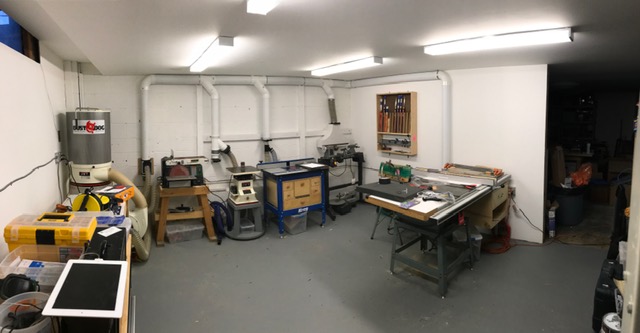
We made a deal on the building and moved all our stuff from storage units. We now have a big workspace with a corner of it dedicated to my shop. Ahh! Someday we will have everything unpacked.
I’ve started work on a new project for Maker Faire in San Mateo which I will describe in the next post.
Cheers!
Craig
The Spin-Cycle, Pedal Powered Spin-art Machine
Posted by Craig in Uncategorized on November 14th, 2016
Here is a short video about my human powered spin art machine that I made for the 2016 East Austin Studio Tour. After making various geometric drawing machines for people to play with, I thought I would make something that depended more on chaos and happenstance.
People seem to enjoy it.
The paint I used is a 4:1 mixture of Minwax acrylic varnish and a bulk Epson printer ink from InkXpress.com
Ill make a longer video after the tour is done.
Cheers,
Craig
The Gathering for Gardner 12
Posted by Craig in Drawing Machines, Games, math, Science, Uncategorized on April 6th, 2016
-

- A very serious bunny!
-

- Puzzles, math, magic and lunch!
-
- A happy spinner
-

- Tim Rowett and Me
I was privileged to attend the 12th Gathering for Gardner. This is a biennial conference celebrating the interests of Martin Gardner.
He penned the Mathematical Games column in Scientific American for 25 years and also wrote about science, skepticism, magic and philosophy.
Here are a few pictures, I’ll post more details later.
Human Powered Drawing Machine
Posted by Craig in Uncategorized on September 21st, 2015
One more drawing machine. I’ve wanted to build one for a while, based on an article in the Boy Mechanic, dated 1913.
Download the book here. Look on page 436.
This one is a mash-up of two of the designs in the original article. Come see it at the 2015 East Austin Studio Tour in November!
Cheers!
The Hill Country Science Mill Opening
Posted by Craig in Drawing Machines, Electronics, Science, Uncategorized on February 25th, 2015
Valantine’s Day was a great day for the Science Mill opening in Johnson City Texas.
The Science Mill is a new science museum geared to middle and high school students and their families.
The mission of the museum “… is to ignite the curiosity, ambition, innovation and problem-solving potential of the next generation through an innovative, immersive experience that enhances the community’s understanding of, and appreciation for, science, technology, engineering and math (STEM).”
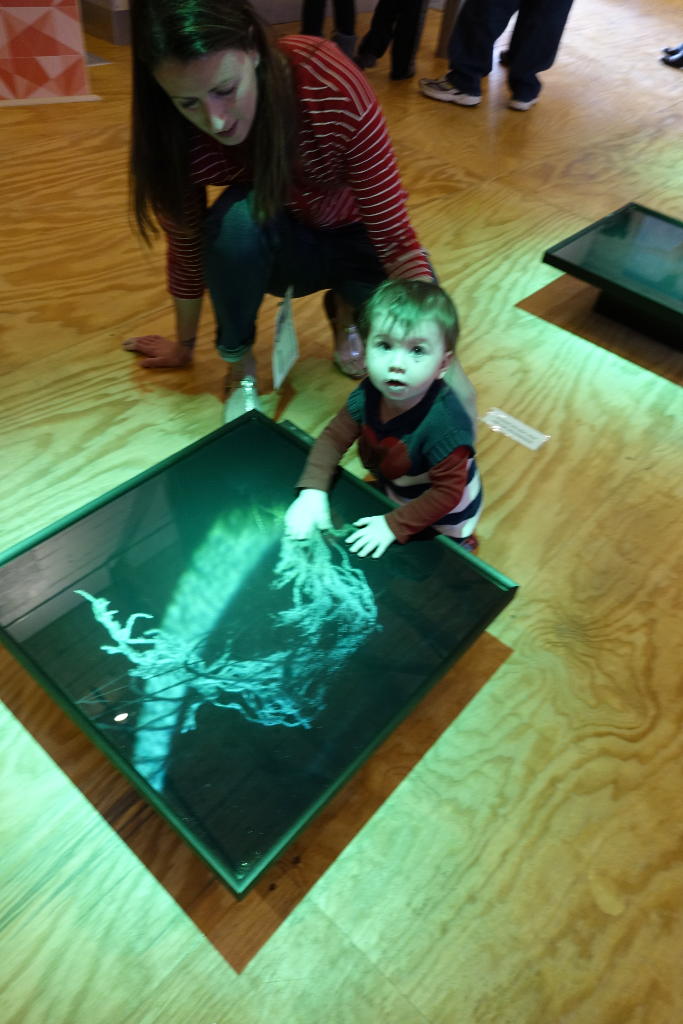
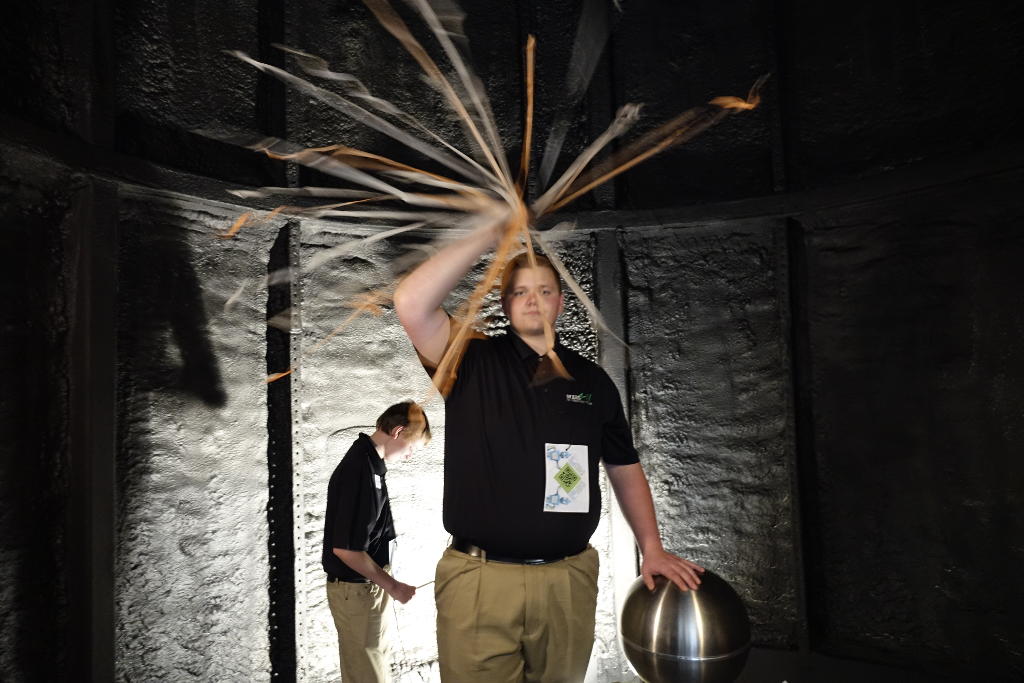
I was privileged to show both a new Van de Graaff generator and my Lissagraph drawing machine at the opening. Enthusiastic Members of the Texas 4H did a great job of demonstrating the Van de Graaff generator as you can see in the gallery below.
My drawing machine and Van De Graaff generator were temporary exhibits for the opening. My wife, Sally Weber has three holograms which are part of the permanent exhibits at the museum.
Please support the new Museum!

Heading to Houston Mini Maker Faire on Nov. 1st
Posted by Craig in DIY, Drawing Machines, Electronics, Open source Graphics software on October 27th, 2014

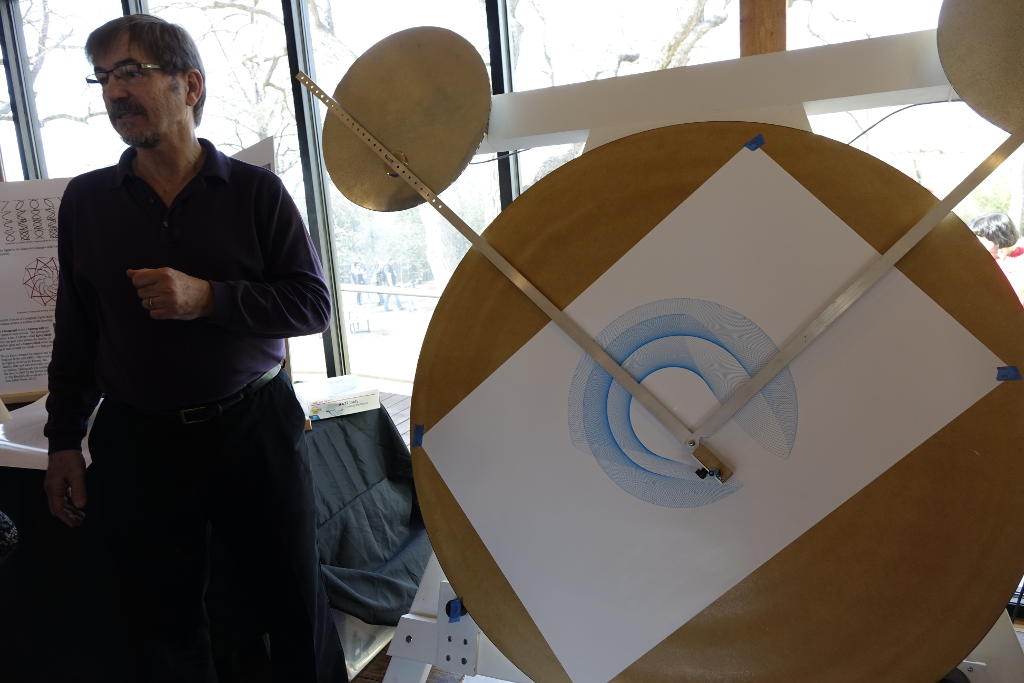
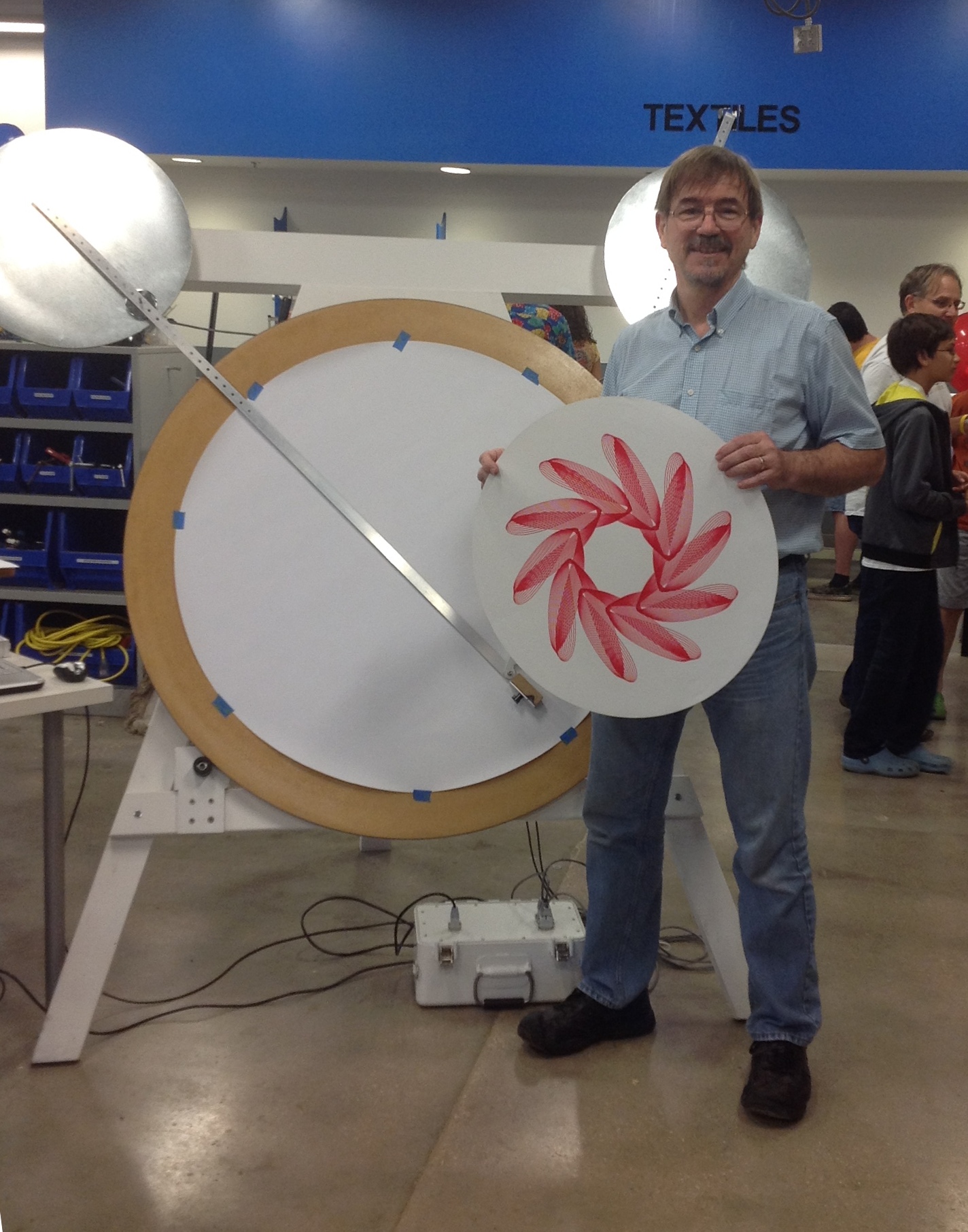
I’ll be showing my Lissagraph II drawing machine.
Come by and say hello.
Yea,the word your trying to remember is Spirograph… its not that, but kind of like that only motorized and huge.
Otherwise, just like that. It’s resemblance to any mouse-like cartoon character is purely caused by design constraints driven by gravity.
(Scroll down below the picture to read some design details.)
The Lissagraph Construction Details
By Craig Newswanger
Mechanical Details
The X and Y cranks are driven through toothed belt drives with a 5:1 ratio. The large turntable for the paper uses a direct friction drive with a rubber drive roller attached to the stepper motor. The friction drive method was chosen for the large turntable to avoid backlash effects that would be visible in the drawings. The turntable is a disk of 1/2” MDF that was cut with a router with a long compass arm.
The drive ratio with the 1 1/2” drive and the 48” diameter disk is roughly 32:1. I carefully calibrated each motor in the software to compensate for the imprecise turntable ratio and differences in the motor drive clock crystals.
There is a single idler roller opposite the motor that supports the turntable and three hard rubber casters on the back. The 20 degree tilt on the machine insures that the turntable disk is stable and rotates freely. The friction drive roller and idler were purchased from McMaster Carr.
Gravity is very dependable! You can quote me on that!
Motors and Controllers
The drive motors for the X and Y cranks are M062-FD8103 made by Superior Electric. I purchased them from Surplus Sales of Nebraska. The larger motor driving the turntable is a Nema 34 motor. I bought that from a friend. The controllers are Mforce drives, made by Schneider Electric
http://motion.schneider-electric.com/products/mforce_overview.html
I used two Micro-drives for the x and y motors and a Power-drive controller for the larger motor.
The communications to the motors is through RS-422 serial link.
I use a usb to RS -422 adapter from Digikey # 768-1044-ND
Software
My original code for the drawing machines were created in PureData, a data-flow language usually used for audio synthesis. I then wrote new code using Processing and G4P user interface tools. The software really only sends speed commands and Go and Stop commands to the motors. While the machine is drawing the computer is idle.
Speed Ratios and Sensitivity to Initial Conditions
I have been experimenting with this sort of pattern drawing in various forms for many years. I have learned what works to make interesting patterns. People ask if I know what a pattern will look like before I run a particular setting. I have a good idea of the type of image that I will get but there are often surprises that arise from small differences in the starting conditions.
One could refine the hardware so that starting states and phases could be precisely controlled but I’m not sure that would be as fun.
I have also not been interested in pre-visualizing the results using the computer. It is more interesting to see the pattern develop gradually. Observing the machine work is captivating to most people.
Although controlled digitally, the machine can be seen as an analog computer whose output is a direct graphical plot of the algorithm on a piece of paper.
ArcAttack and Percussibot Front and Center at LSC
Posted by Craig in Electronics, MIDI, Music, Tesla Coils, Uncategorized on May 10th, 2014
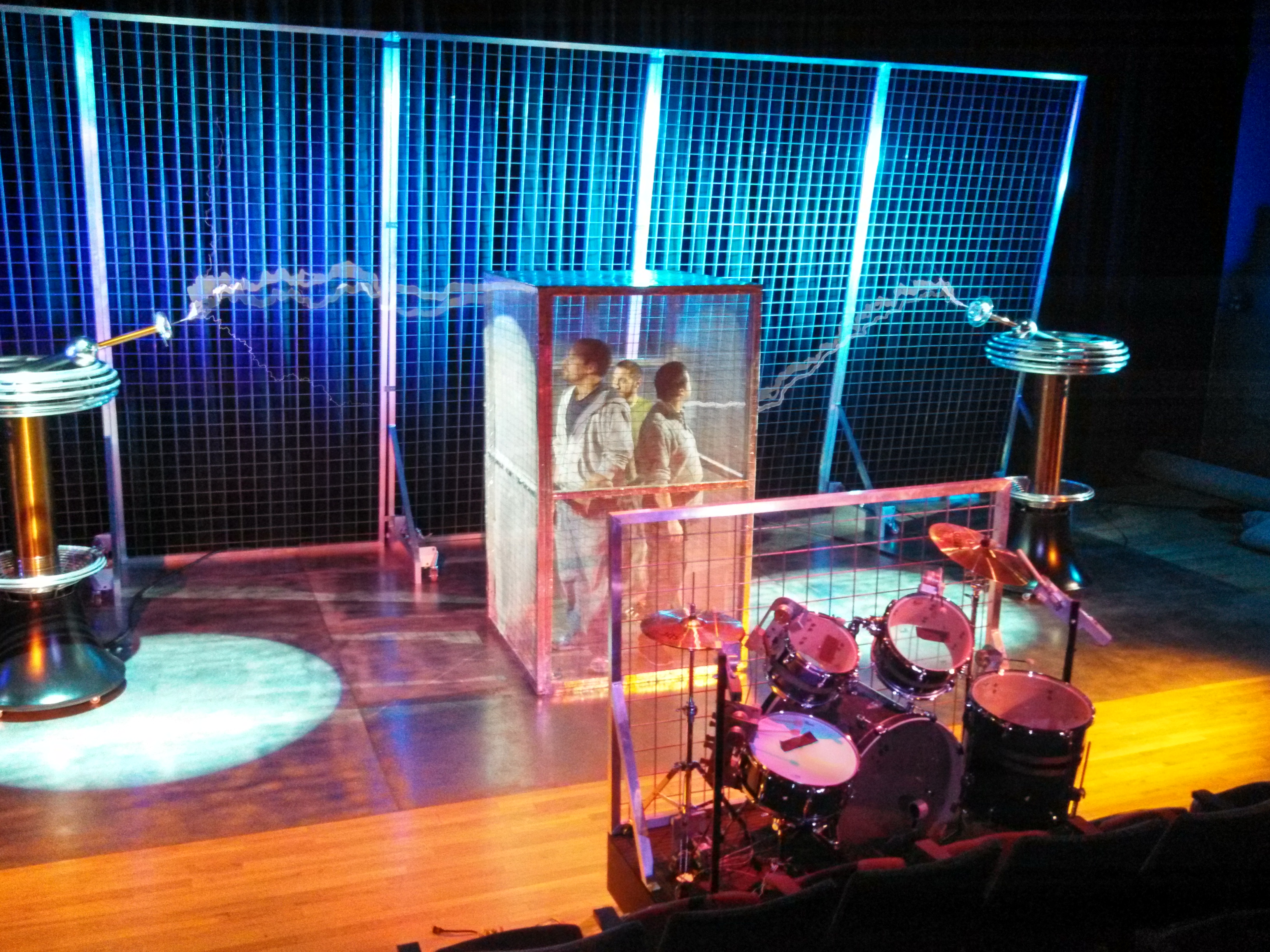
Arcattack was part of the entertainment Friday May 9th, at the Liberty Science Center Genius Gala 3.0.
“Liberty Science
Center (LSC
.org) is a 300,000-square-foot learning center located in Liberty State Park on the Jersey City bank of the Hudson near the Statue of Liberty. Dedicated to bringing the excitement of science to people of all ages, Liberty Science Center houses 12 museum exhibition halls, a live animal collection with 110 species, giant aquariums, a 3D theater, the nation’s largest IMAX Dome Theater, live simulcast surgeries, tornado and hurricane-force wind simulators, K-12 classrooms and labs, and teacher-development programs. More than half a million students, teachers, and parents visit the Science Center each year, and tens of thousands more participate in the Center’s offsite and online programs. LSC is the most visited museum in New Jersey and the largest interactive science center in the NYC-NJ metropolitan area.” from the LSC website
David Blaine donated two coils to LSC from his Electrified event in New York. Those coils were a bit too big for the LSC theater so Arcattack was commissioned to build a more compact set of coils. I was commissioned separately to build a new Percussibot drum robot for the installation. This is the first permanent installation for a Percussibot!
Sam McFadden did a great job on the coil design. 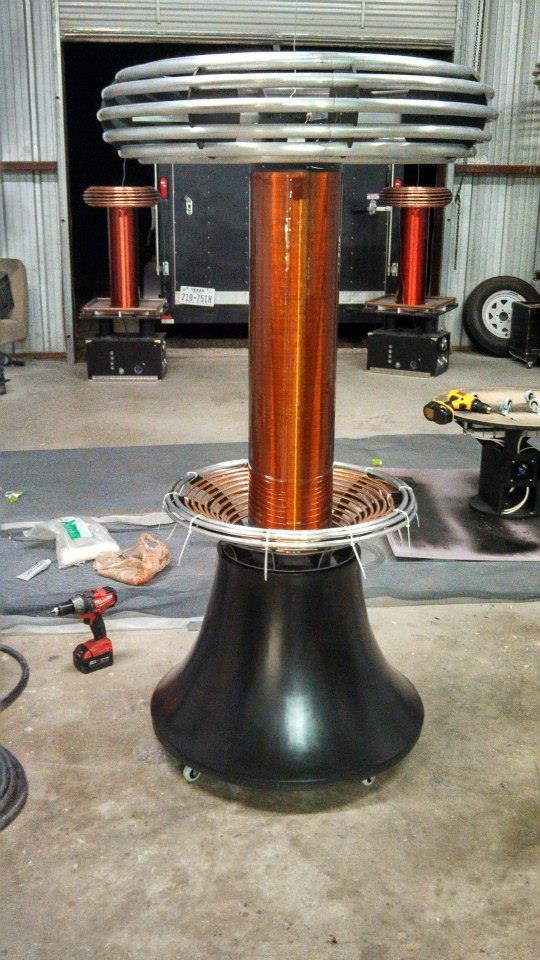 Yes Sam, that is one sexy Tesla Coil!
I’ll post a video as soon as I get access to one.
Heading for G4G (Gathering for Gardner)
Posted by Craig in Uncategorized on March 16th, 2014
I’m thrilled to be invited to the Gathering for Gardner in Atlanta this coming week.
An interesting meeting led to an invitation to this great event. I had heard about the organization but never thought I could attend.
The Gathering is named for Martin Gardner was a popular science and mathematics writer. He had a column in Scientific American magazine called Mathematical Games. My father and I looked forward to this column and the Amateur Scientist articles.
The theme of the G4G conference this year is the work of John Horton Conway. He came up with a fascinating thing called the Game of Life based on the idea of the Cellular Automaton.
A popular open source version of this game can be found on the Golly website.
A good source for initial patterns for Life can be found here.
I’m making a hologram for the event, of a life pattern in 3D by creating a pointcloud where the x and y are the normal 2D Life plane and the third, Z direction is time.
Here is a 2D hint at what the hologram will look like. I rarely mention my day Job on my blog. Its Zebra Imaging, Inc. We are currently expanding our stock image page. Send a note to Zebra if you would like to see this image on the stock image page.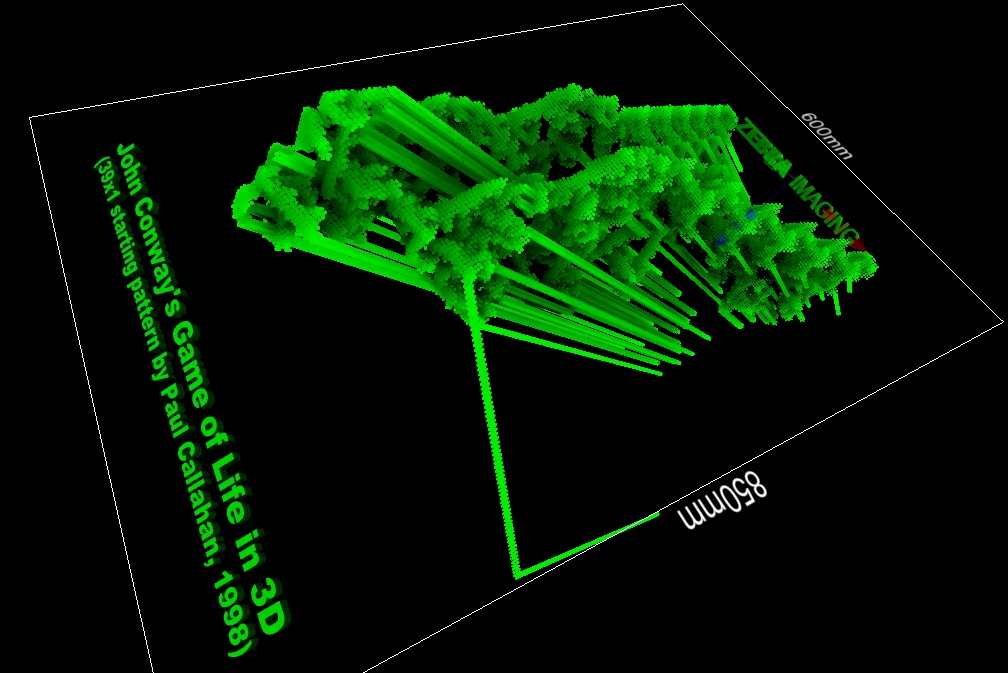
It’s Alive!
Posted by Craig in DIY, Drawing Machines, Electronics, Uncategorized on November 15th, 2013
I’ve installed and programmed the new motor drivers. I used two Mforce Microdrives and one Mforce Powerdrive modules from Schnieder Electric:
http://motion.schneider-electric.com/index.html
My local distributor for Schneider Electric is Olympus Controls:
http://www.olympus-controls.com/
Here is a drawing from the new Lissagraph machine:

Lissagraph Drawing
X=3,Y=5, T=1
I’ll post some pictures on Saturday during the East Austin Studio Tour.
Cheers!